Mold Removal Houston: The Complete Remediation Guide
·Marcus Chen

Written by Marcus Chen
Software engineer in The Heights, Houston. Built HoustonHomeRestore after losing $47,000 to water damage and hidden mold following Hurricane Harvey.
After Hurricane Harvey, I found black mold behind drywall in three rooms of my Heights home. What I thought would be a $2,000 problem turned into an $18,000 remediation because I waited too long and because the crawlspace beneath my house was also severely infested. Improperly treated water damage was the direct cause. This guide gives you what I wish I had known before that happened.
Houston is exceptionally mold-prone. The combination of extreme heat, humidity exceeding 90% in summer, an active hurricane season, and an older housing stock with crawlspaces creates near-ideal conditions for mold growth. What would be a contained problem elsewhere can become a whole-home infestation within weeks here.
If You Discover Mold: Immediate Steps
Don't Disturb the Area
Spraying or scraping mold without proper equipment disperses spores through the air. Close the door to the room and disable HVAC in that zone if you can, to prevent spore spread.
Find and Eliminate the Moisture Source
Mold won't grow back if you eliminate moisture. Find the leak, AC condensate, or water intrusion. Without fixing the source, any remediation is temporary.
Document and Call Your Insurer
Photograph all visible mold. If the mold resulted from a covered event (burst pipe, not flooding), call your insurer before doing any work. Premature removal can invalidate your claim. See our insurance claim restoration guide for Houston for more on the claims process.
Why Houston Is a Mold Hotspot
90%+ Humidity and Year-Round Heat
Mold needs three things to grow: moisture, temperatures above 40°F, and organic material (wood, drywall, paper, fabric). Houston chronically meets all three. Our average July relative humidity is 90%, and winters rarely drop below 40°F. Combined with standard building materials in local homes, this creates a near-permanent mold growth opportunity.
Air Conditioning Condensate
AC systems in Houston run up to 10 months per year and generate enormous amounts of condensate. A 3-ton AC unit can produce 20 to 30 gallons of water per day on a humid summer day. If the condensate drain line clogs, that water overflows into the air handler plenum, attic, or walls, creating perfect mold conditions without you noticing until the smell becomes unmistakable. This is especially relevant heading into the July 2026 peak cooling season.
Crawlspaces in Historic Neighborhoods
Pier-and-beam homes in The Heights, Montrose, Oak Forest, Garden Oaks, and other Houston neighborhoods built before 1970 have crawlspaces that are frequently bare earth. These crawlspaces absorb moisture from the soil, collect water during floods, and have minimal air circulation. Many homeowners never inspect their crawlspace for years. By the time mold reaches the main floor, it's often already infested the entire substructure.
Post-Hurricane Mold
Hurricane Harvey in 2017 flooded more than 200,000 structures in the Houston area. Homes that did not receive proper flood cleanup within the first 2 to 3 weeks frequently developed severe mold. Even homes that 'looked fine' externally had active mold growing behind drywall that was not detected until months later when residents began experiencing health symptoms. After any significant tropical storm, check the crawlspace within 7 days.
How to Identify Mold in Your Houston Home
Identifying mold early is key to reducing remediation costs. For a more detailed step-by-step guide, read our article on how to find mold in your Houston home.
Visual Signs
- •Black, green, or gray spots on walls or ceilings
- •Paint discoloration or bubbling
- •White powdery spots on wood
- •Dark staining at bathroom caulk joints
Smell Signals
- •Persistent musty or earthy odor
- •Smell worsens when AC kicks on
- •Stronger smell near HVAC vents
- •Damp smell below floors (crawlspace)
Health Symptoms
- •Persistent coughing or sneezing at home
- •Itchy eyes, nose, or throat
- •Symptoms improve when you leave home
- •Frequent headaches with no other cause
The Professional Mold Remediation Process
Texas regulates mold remediation under the Texas Mold Assessment and Remediation Rules (25 TAC Chapter 295). This is the standard process any TDLR-licensed firm must follow.
Assessment and Testing
A TDLR-licensed mold assessor (not the remediator) conducts air and surface sampling. The result is a written scope of work specifying which materials must be removed versus treated. Cost: $300 to $600 for initial assessment.
Containment
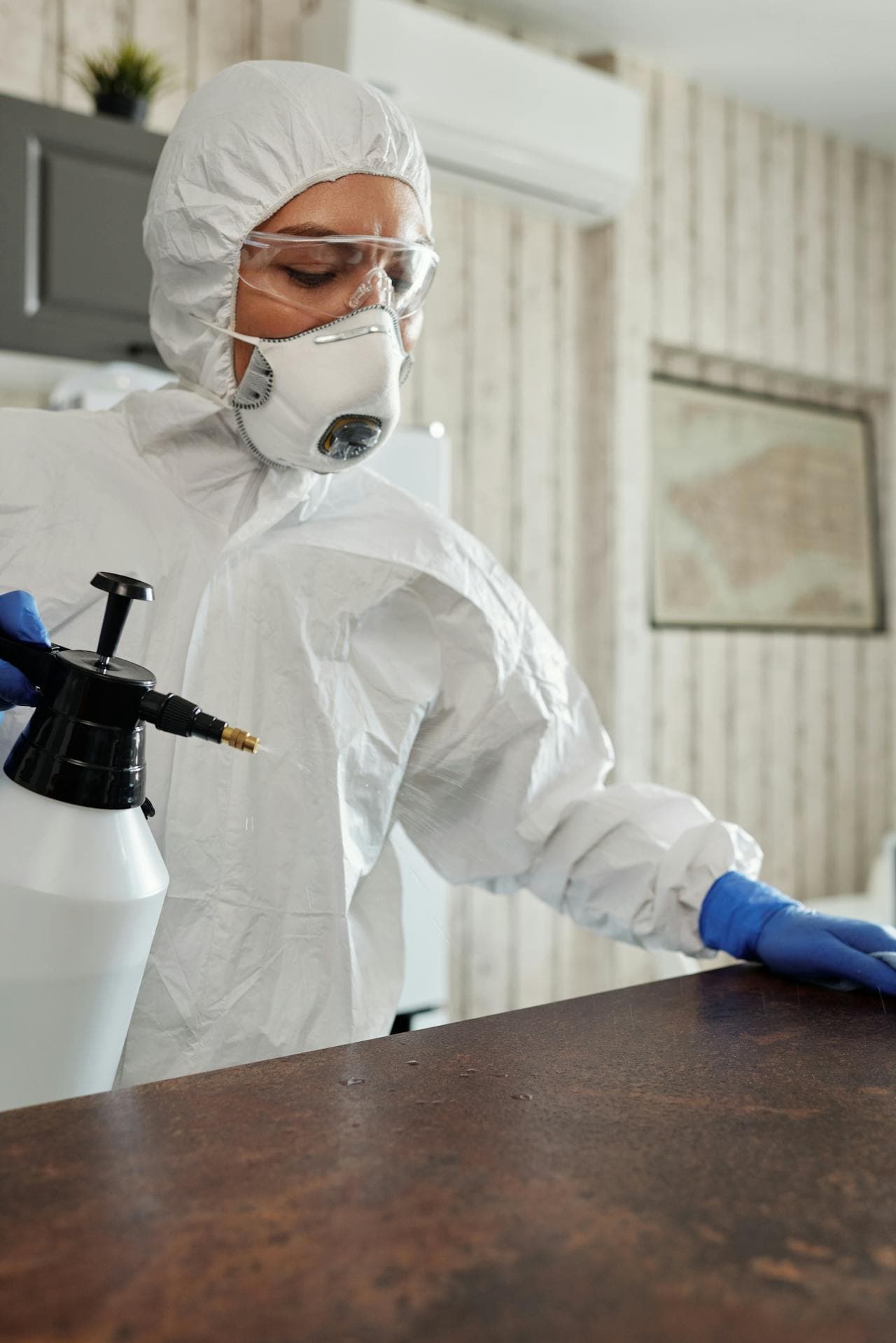
The affected area is sealed with 6-mil poly sheeting to prevent spore spread. Negative air pressure is established using HEPA units. HVAC is disabled or sealed in the containment area.
Damaged Material Removal
All porous material with active mold growth is removed and double-bagged in 6-mil poly. This includes drywall, insulation, carpet, and in severe cases, structural lumber. Non-porous materials (metal, glass, plastic) can be cleaned in place.
HEPA Cleaning and Treatment
All surfaces within the containment area are HEPA-wiped and treated with approved biocide. Some firms use chlorine dioxide or ozone fogging. Ozone fogging requires the home to be unoccupied.
Post-Remediation Verification
An independent licensed mold assessor (different firm from the remediator, required by Texas law) conducts final air sampling tests. The area cannot be reconstructed until it passes. This is the single most important consumer protection in the process.
Mold Remediation Costs in Houston
These costs reflect Houston market pricing for 2025-2026. For a more detailed breakdown of factors that affect pricing, see our article on mold remediation costs in Houston.
| Work Type | Low | High | Notes |
|---|---|---|---|
| Initial mold assessment | $300 | $600 | TDLR-licensed assessor |
| Small area remediation (1-3 rooms) | $1,500 | $5,000 | Under 25 contiguous sq ft |
| Moderate remediation (full floor) | $5,000 | $15,000 | Includes drywall removal |
| Severe whole-home remediation | $15,000 | $50,000+ | Post-flood, includes crawlspace |
| Crawlspace remediation | $2,000 | $10,000 | Common in Heights, Montrose |
| AC/HVAC unit cleaning | $400 | $2,000 | Drain lines, coils, ducts |
| Post-remediation verification test | $300 | $700 | Required by Texas law |
Houston-Specific Mold Risks
Clogged AC drain lines
The number one mold problem I see in Houston. Clean the condensate drain line every six months with toilet tank tablets placed in the air handler plenum. This prevents clogs that result in overflow.
Ductwork in attics
HVAC ducts in Houston attics experience extreme condensation when cool conditioned air meets attic heat. Poorly sealed or leaking ducts develop mold internally and distribute it throughout the home.
Soil vapor in crawlspaces
In pier-and-beam homes, bare earth in the crawlspace emits water vapor that gets trapped. Installing a 20-mil vapor barrier over all crawlspace soil can dramatically reduce humidity.
Post-tropical storm flooding
After any tropical storm passes, inspect the crawlspace, attic, and under-sink areas within 3 days. Hidden flooding in unoccupied areas is the primary cause of undetected mold.
Mold Prevention Strategies for Houston Humidity
Preventing mold in Houston is not 100% achievable, but the right maintenance approach can reduce risk dramatically. Since water damage is the leading cause of mold, also see our guide on how to prevent water damage in Houston.
Keep indoor humidity below 55% using AC and dehumidifiers. Use a hygrometer to monitor.
Clean AC condensate drain line every six months. Cost: $0 with toilet tank tabs.
Repair any plumbing leaks within 24 to 48 hours of discovery. Standing water promotes mold fast in Houston's climate.
Install a vapor barrier in the crawlspace if you have pier-and-beam foundations.
Change HVAC filters monthly from May through October. Dirty filters recirculate spores.
Ensure bathroom exhaust fans work and that ducts vent outside, not into the attic.
Consider mold-inhibiting paint in bathrooms and under-sink spaces.
FAQ: Mold Removal in Houston
Related Guides
Related Blog Posts
Mold removal Houston Texas: TDLR licensed mold remediator, Texas Mold Assessment Remediation Rules 25 TAC 295, post-remediation verification testing Houston, Stachybotrys Cladosporium Penicillium Aspergillus Houston, pier-and-beam crawlspace mold The Heights Montrose Oak Forest, AC condensate mold Houston, Hurricane Harvey mold damage Houston, indoor humidity 55% Houston, HEPA containment mold remediation, mold remediation cost Houston 2026, Texas homeowners insurance mold sublimit, vapor barrier crawlspace Houston, HVAC duct mold Houston, mold health symptoms Houston, mold prevention Houston humid climate.