In Houston, the distinction between water damage and flood damage insurance is critically important. Homeowners insurance covers water damage from internal sources (burst pipes, appliance failures, roof leaks from wind) but explicitly excludes flooding from external sources including bayou overflow, storm surge, and overland flooding. Flood coverage requires a separate NFIP policy or private flood insurance. Houston is crossed by numerous bayous that can overflow rapidly during heavy rain, and much of the city lies in or near FEMA-designated flood zones. Under NFIP Risk Rating 2.0, premiums are now based on individual property risk, with Houston-area policies typically running $800 to $2,500 annually. Hurricane Harvey demonstrated that FEMA Zone X designations do not guarantee safety from flooding: reservoir releases flooded thousands of Zone X homes in Katy and west Houston. The 30-day NFIP waiting period means flood insurance cannot be purchased in advance of an approaching storm.
Water Damage vs. Flood Damage Insurance in Houston: What Every Homeowner Must Know
MC
February 15, 2025··8 min read·Marcus Chen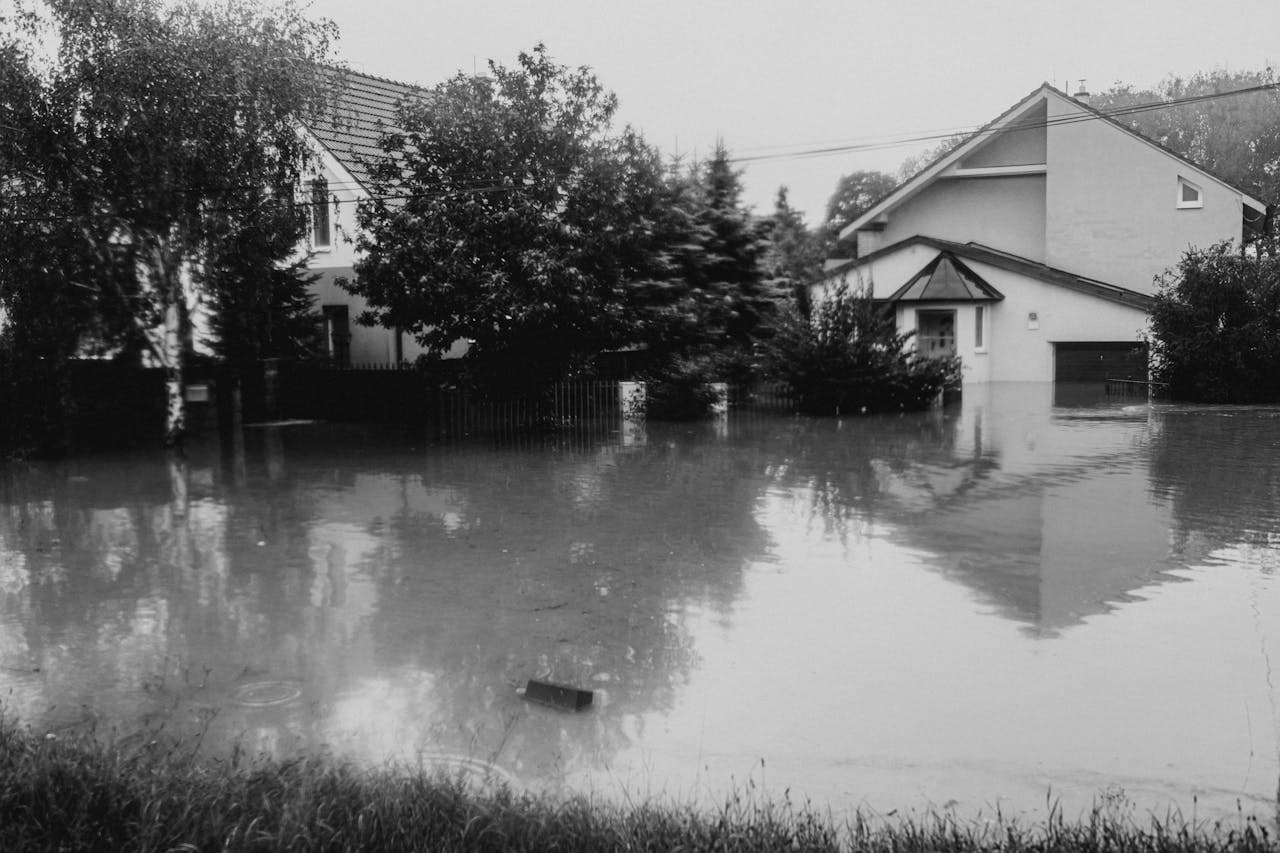
Quick Answer: Water damage (from internal sources like burst pipes) is covered by homeowners insurance. Flood damage (from external sources like bayou overflow or storm surge) requires a separate NFIP flood insurance policy. In Houston, where bayou flooding and hurricane-driven inundation are constant risks, this distinction is one of the most important financial facts a homeowner can know.
I am going to say something blunt: the confusion between water damage and flood damage insurance is the single most costly financial mistake Houston homeowners make. After Harvey, an estimated 80% of flooded Houston-area homes had no flood insurance. None. Those homeowners carried homeowners insurance, but that policy did not cover what happened to them. They were left with tens of thousands of dollars in damage and no coverage. The line between these two types of coverage is not obvious, it is not well-publicized by the insurance industry, and it has enormous real-world consequences. This guide, refreshed as of July 2026, exists to make sure you understand it completely.

Written by Marcus Chen
Software engineer in The Heights, Houston. Built HoustonHomeRestore after losing $47,000 to water damage and hidden mold following Hurricane Harvey.
The Fundamental Difference: Where Did the Water Come From?
Insurance coverage for water damage depends entirely on the source and pathway of the water. Homeowners insurance covers water that originates inside your home or falls directly from the sky onto your structure. Flood insurance covers water that comes from the ground up or flows in from outside your home. If a pipe in your wall bursts and soaks your floors, that is water damage covered by homeowners insurance. If Buffalo Bayou overflows its banks and water flows into your home from the street, that is flood damage covered only by flood insurance.
- •Homeowners insurance covers: burst pipes, appliance leaks, roof leaks (from rain directly), ice dams
- •Flood insurance covers: overflowing rivers and bayous, storm surge, overland flooding, mudslides
- •The test: did the water originate inside the home or come from external accumulation?
- •Gray area: wind-driven rain through a broken window. Generally covered by homeowners as a wind damage claim.
- •Gray area: drain backup. Covered only if you have a sewer backup endorsement on your homeowners policy.
FEMA Flood Zones in Houston: Where You Live Determines Your Risk
FEMA maintains Flood Insurance Rate Maps (FIRMs) that classify properties by flood risk. In Houston, these maps are critically important because our flat topography and extensive bayou network put a huge proportion of the city in moderate to high risk zones. Properties in high-risk zones (Zone AE, Zone AO, Zone AH, Zone VE) are required to carry flood insurance if they have a federally backed mortgage. But here is what many Houstonians do not know: Harvey caused catastrophic flooding in areas that were not in high-risk FEMA flood zones. The Addicks and Barker Reservoir releases flooded thousands of homes in Katy, Bear Creek, and west Houston that were not designated as high-risk flood zones.
- •Zone X (Shaded): moderate flood risk, between 100 and 500-year flood plain. Not required but recommended.
- •Zone AE: high risk, 1% annual chance of flooding. Flood insurance required for federally backed mortgages.
- •Zone AO: shallow flooding zone with average depths of 1 to 3 feet. Flood insurance required.
- •Zone VE: coastal high-hazard zone with wave action. Applies to Clear Lake, Seabrook, areas near Galveston Bay.
- •Zone X (Unshaded): minimal risk. No requirement, but Harvey showed this designation can be misleading.
- •Check your property's flood zone at FEMA's Flood Map Service Center: msc.fema.gov
How NFIP Flood Insurance Works in Houston
The National Flood Insurance Program is administered by FEMA and provides flood coverage through participating insurance agents. NFIP updated its pricing model (Risk Rating 2.0) to more accurately reflect individual property risk rather than just flood zone designation. Houston properties with a history of flooding are seeing significant premium increases under this model.
- •Maximum NFIP coverage: $250,000 for the building structure
- •Maximum NFIP contents coverage: $100,000 (must be purchased separately from building coverage)
- •Waiting period: 30 days after purchase before coverage takes effect (exceptions for new purchases and mortgage requirements)
- •NFIP does not cover: additional living expenses during displacement, decks, patios, swimming pools, most landscaping
- •Risk Rating 2.0: premiums now based on individual property flood history and characteristics, not just flood zone
- •Average NFIP premium in Houston: $800 to $2,500 per year depending on risk
- •Excess flood insurance: private carriers sell policies above NFIP limits for high-value homes
The Addicks and Barker Lesson: Why Zone X Is Not Safe in Houston
During Harvey, the Army Corps of Engineers made the decision to release water from the Addicks and Barker Reservoirs in west Houston to prevent catastrophic dam failure. This release flooded thousands of homes that had never flooded before and were not in high-risk FEMA flood zones. Homeowners who had paid off their mortgages or whose mortgages were not federally backed had no flood insurance requirement and many had no coverage. The legal battles that followed cost years and millions in legal fees. The lesson is stark: in Houston, living outside a FEMA high-risk zone does not mean you are safe from flooding. After any flooding event, a prompt call to a water damage restoration service is critical to limit further losses.
- •Addicks and Barker Reservoirs serve a 25,000-acre watershed in west Houston and Katy
- •During Harvey, releases flooded areas in Energy Corridor, Bear Creek, and parts of Katy
- •Many of these homes were in Zone X (minimal risk) on FEMA maps
- •Homeowners without flood insurance received FEMA disaster assistance only, which averages $5,000 to $7,000, far below actual repair costs
- •Flooding due to reservoir releases may be classified differently than natural flooding for insurance purposes
How to Tell Which Coverage Applies to Your Houston Claim
When you file a claim after a Houston flooding event, one of the first questions your adjuster will ask is: where did the water come from? The source and pathway of water entry determines which policy applies. In many Houston flooding events, both policies can apply simultaneously, for example, if a roof leak caused by hurricane winds (homeowners) combined with bayou overflow (flood insurance) damaged the same home.
- •Keep detailed notes and photos of how water entered your home
- •Document whether water came through the roof, walls, windows, doors, or up through the floor
- •Note whether bayous, streets, or drainage systems were visibly overflowing
- •If both types of damage occurred, file claims with both carriers
- •Do not let one adjuster tell you that the other policy should cover everything
- •Hire a public adjuster if you have both types of coverage and a complex loss
Private Flood Insurance: An Alternative to NFIP
Private flood insurance has grown significantly in Texas over recent years. Private carriers can offer broader coverage than NFIP, including additional living expenses, higher coverage limits, and faster claims processing. In some cases, private flood insurance is cheaper than NFIP, particularly for properties in moderate-risk zones. Texas accepts private flood insurance to satisfy mortgage flood insurance requirements in most cases.
- •Private flood insurance can cover: additional living expenses, higher structure limits, replacement cost value (NFIP pays actual cash value)
- •Waiting period may be shorter with private carriers (often 14 days versus 30 days for NFIP)
- •Coverage limits can exceed NFIP maximums of $250,000/$100,000
- •Premium comparison: get quotes from both NFIP and private carriers
- •Verify that your mortgage lender will accept private flood insurance before switching from NFIP
Frequently Asked Questions
No. Standard homeowners insurance excludes flooding from external sources including bayou overflow, storm surge, overland flooding, and reservoir releases. You need a separate flood insurance policy through NFIP or a private carrier. After Harvey, roughly 80% of flooded homes in the Houston area had no flood insurance.
Related Resources
Water Damage Restoration Services in Houston →Insurance Claim Restoration Services in Houston →Does Homeowners Insurance Cover Water Damage in Houston? →Complete Guide to Insurance Coverage for Water, Mold, and Fire Damage in Houston →Hurricane Season Water Damage Guide for Houston Homeowners →Is Hiring a Public Adjuster Worth It in Houston? →